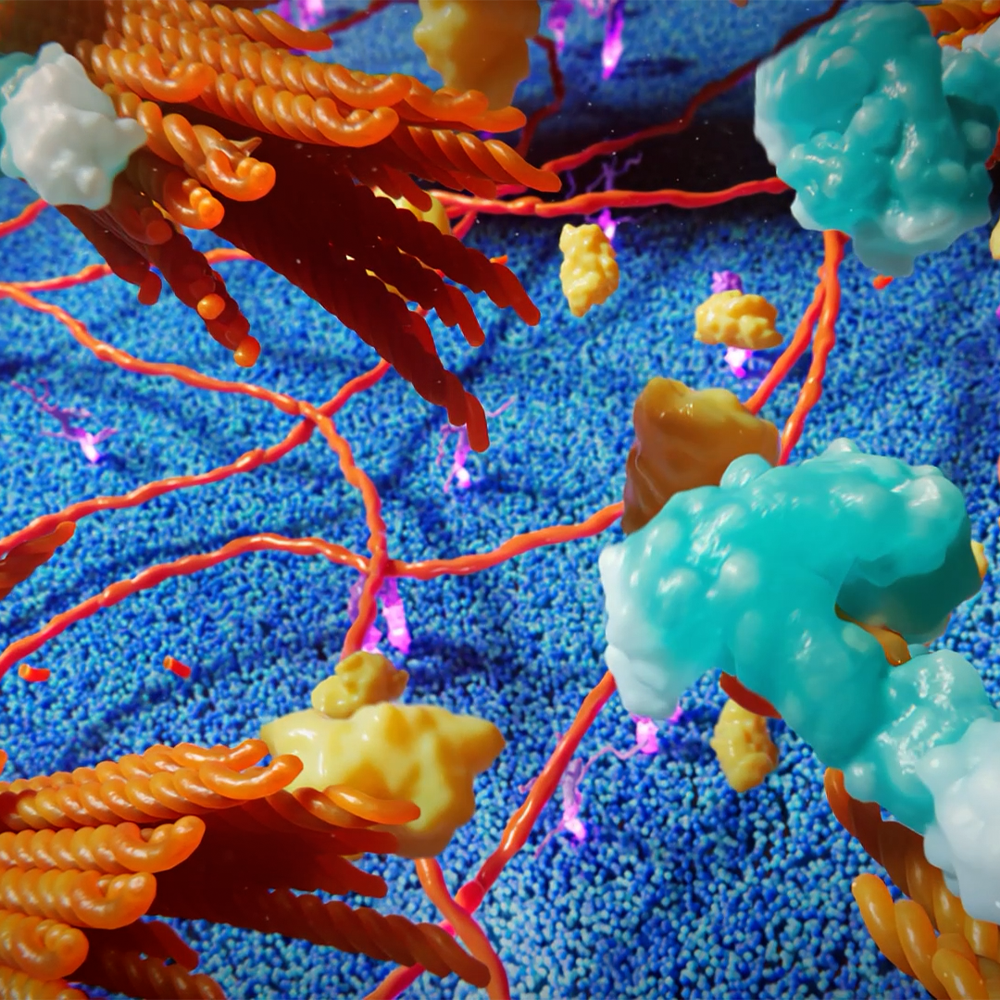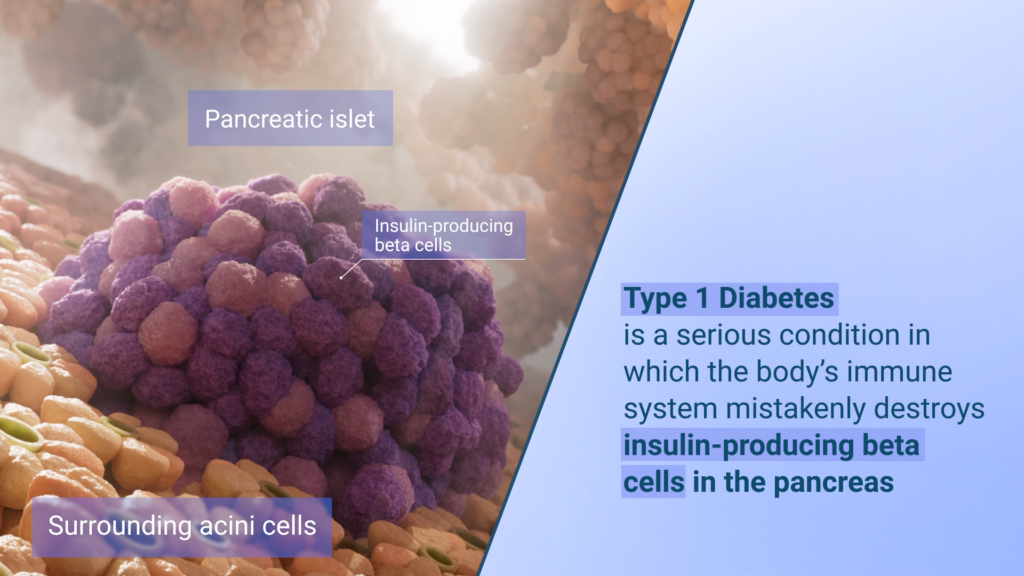
Type 1 diabetes affects nearly 10 million people worldwide, yet the precise trigger that sets the disease in motion remains unknown. While genetics play a role, they don’t fully explain the rapid rise in cases. ENT1DEP, an EU-funded research consortium coordinated by Tampere University, has been focused on a compelling lead that enteroviruses may be an environmental trigger, infecting the insulin-producing beta cells of the pancreas and setting off a chain reaction.
We partnered with ENT1DEP to animate this hypothesis. The animation follows the virus from entry through the respiratory or gastrointestinal tract, into the bloodstream, and into the beta cells themselves. From there, we take the viewer inside the cell, showing how a persistent low-grade infection may stress beta cells over time, overwhelm their machinery, and ultimately trigger an autoimmune response that destroys them.
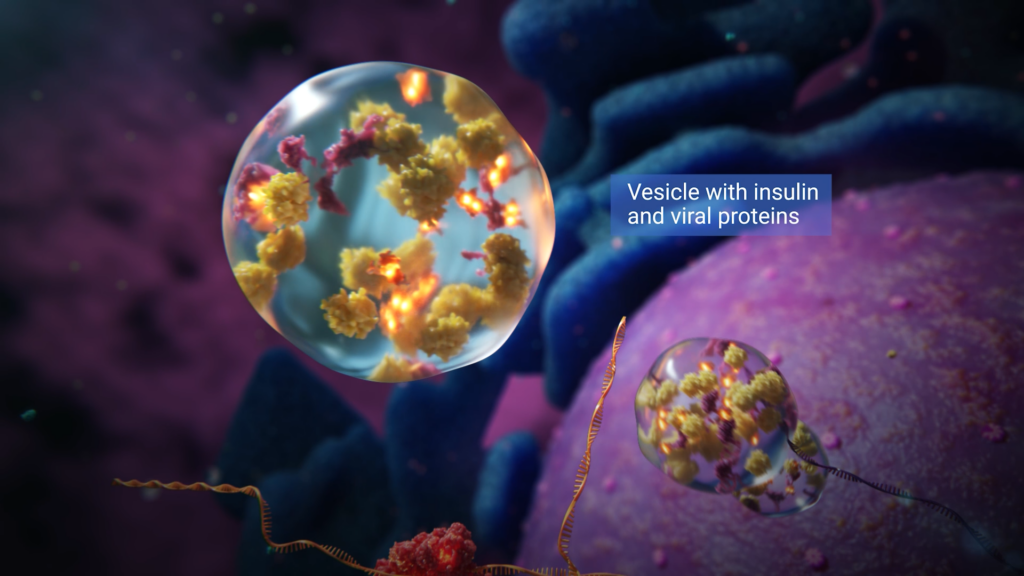

Research is actively exploring vaccines to prevent enterovirus infection and antiviral therapies that could eradicate persistent infection before the autoimmune cascade begins. The scientific script was developed by four internationally recognized researchers spanning clinical diabetology, virology, immunology, and cell biology.
Learn more about this animation in our blog: XVIVO Partners with ENT1DEP to Animate How Viruses May Cause Type 1 Diabetes and our PR release: XVIVO Creates Animation for EU-Funded Research Consortium Exploring the Link Between Viruses and Type 1 Diabetes
Related Animations